5 Critical Material Challenges in Band Saw Procurement - A Practical Checklist for Industrial Buyers
Summary
This article highlights five major material challenges that industrial procurement professionals should consider when selecting a band saw machine. From steel to composites, it explains how to assess machine compatibility and provides a practical checklist for decision-making. It also outlines key material and manufacturing trends that are shaping future procurement strategies, supported by credible industry references.
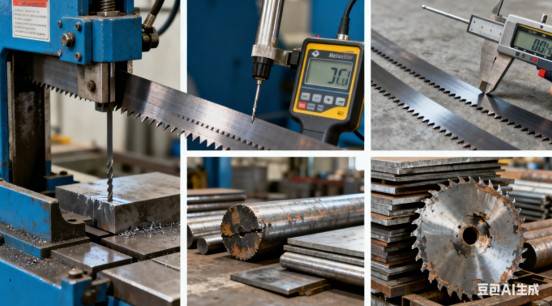
5 Critical Material Challenges in Band Saw Procurement
When procurement teams evaluate band saw machines, one central theme consistently emerges: material compatibility. The right choice is not merely about blade size or motor power — it depends heavily on the materials being processed daily.
This article explores:
- The five material categories that pose distinct cutting challenges
- A practical checklist for assessing saw suitability
- Real-world industrial applications
- Industry trends influencing material and machine technology
Why Material Compatibility Matters More Than Ever
Recent advances in lightweighting, multi-material joining, and composite technology have significantly impacted metal and composite cutting operations. These trends — from automotive to aerospace and renewable energy — are transforming how manufacturers select cutting equipment.
Examples include:
- The rise of composite-metal hybrid structures in automotive applications
- Increasing use of high-strength aluminum alloys and titanium in aerospace
- Wider adoption of carbon- and glass-fiber composites in consumer and green energy sectors
As these materials become mainstream, saw machines must offer precise control, stability, and adaptability. If the saw cannot reliably cut target materials at efficient cycle times, it becomes a production bottleneck.
The 5 Material Categories & Their Key Challenges
| Material Type | Key Cutting Challenge(s) | Procurement Considerations / Checklist |
|---|---|---|
| Carbon Steel / Mild Steel | Heat buildup, blade wear | Blade type (bimetal, carbide tipped), coolant compatibility, tooth pitch |
| Hardened / Tool Steel | Chip evacuation, high wear | Rigidity, vibration control, feed force, blade tension |
| Aluminum & Aluminum Alloys | Gumming, chip clogging | Low friction coatings, high tooth count, chip breaker design |
| High-Temperature Alloys / Titanium | Thermal expansion, alloy hardening | Blade material, cooling strategy, slow feed rate, robust drive system |
| Composites / Multi-Layer Assemblies | Delamination, heterogeneous layers | Variable speed control, dual-blade strategies, dust control, vacuum system |
1. Carbon Steel / Mild Steel
Still the most common material in general manufacturing. While relatively easy to cut, it presents issues of heat generation, burr formation, and blade fatigue over time.
- Choose blades with suitable tooth geometry for steady heat distribution.
- Verify that coolant systems are compatible with the steel type.
- Ensure machine damping minimizes vibration and prolongs blade life.
2. Hardened / Tool Steel
Steels exceeding 40 HRC hardness require exceptional rigidity and precision.
- Machines must maintain high blade tension and minimal vibration.
- Feed rates should be carefully regulated to avoid blade breakage.
- Advanced blade materials and cooling systems are essential for efficiency.
3. Aluminum & Aluminum Alloys
Though softer than steel, aluminum can clog blades and cause adhesive wear.
- Blades with low-friction coatings and fine-tooth geometry improve chip flow.
- Machines should support reversible feed or chip-clearing cycles.
4. High-Temperature Alloys / Titanium
Used in aerospace and power generation, these materials pose thermal and mechanical challenges.
- Require slow feed, robust drive systems, and efficient cooling.
- Saw structure must withstand heat expansion without loss of precision.
5. Composites / Multi-Layer Assemblies
Composite and hybrid materials increase risks of delamination and uneven cutting.
- Variable speed and programmable feed systems help adapt to material layers.
- Dual-blade or alternate-cutting setups improve edge quality.
- Effective dust control is vital for precision and operator safety.
Procurement Checklist
- Assess material portfolio and cutting frequency
- Verify blade change flexibility
- Confirm programmable speed and feed settings
- Evaluate coolant and lubrication compatibility
- Ensure frame rigidity and vibration damping
- Review chip/dust removal capabilities
- Consider after-sales support and local parts availability
Machines that fail to meet these conditions may lead to premature wear or inconsistent performance.
Industrial Applications
- Aerospace: Titanium and aluminum parts requiring fine surface finishes
- Automotive: Lightweight alloys for EV components
- Renewable Energy: Fiber-reinforced composites for turbine blades
- Tool & Die: High-hardness steel billets prepped for CNC machining
Each application underscores the need for equipment tailored to specific material behaviors.
Industry Trends Impacting Material Cutting
-
AI and IoT Integration in Band Saw Systems The bandsaw market is moving toward AI-enabled monitoring and predictive maintenance for real-time optimization. (Future Market Insights)
-
Automation and Intelligent Control Systems Modern saws now incorporate sensors to auto-adjust blade tension and feed speed. (Accio Business Insights)
-
Cryogenic and Hybrid Lubrication Technologies Hybrid cryo-MQL methods enhance machinability and reduce wear on high-temperature alloys and composites. (ScienceDirect)
-
Sustainability and Energy Efficiency Energy-efficient machines and eco-friendly cooling methods are becoming procurement priorities. (ResearchGate)
These trends underline the growing need for smarter, greener, and more flexible sawing technologies.
Conclusion
Selecting a band saw machine is no longer a decision based solely on specifications. The real value lies in matching material challenges to machine capabilities. Understanding the interaction between saw systems and different materials — from carbon steel to composites — ensures reliability, longevity, and cutting precision.
By applying the above checklist and keeping pace with technological and sustainability trends, procurement professionals can make data-driven decisions that enhance productivity and extend equipment life.